Clostridia in Broilers: Could the Silent Killer Be Hiding in a Normal-Looking Flock?
Clostridia can silently reduce broiler profit through mortality, poor FCR, gut damage, and subclinical necrotic enteritis. This article explains why Clostridia become dangerous, the role of coccidiosis, feed quality, mycotoxins, litter, and immunity, and how better gut health management can help control necrotic enteritis, ulcerative enteritis, and botulism.



Imagine you are walking inside a broiler house. The birds look good. They are eating, drinking, and nothing seems abnormal. Then suddenly, you find some dead birds with no clear clinical signs.
What would come to your mind?
Would you suspect a viral disease?
To make the question clearer: would you think about Clostridia?
Today, let’s talk a little about Clostridia. Clostridia are known to be one of the possible causes, among many others, of financial losses in poultry farms. These losses may come from mortality, which is often not very high, but also from poor performance and increased feed conversion ratio, or FCR.
Imagine that a review published in 2020 reported that necrotic enteritis caused by Clostridia may cost the global poultry industry around 2 to 6 billion US dollars every year. This is a huge number. The same review also mentioned a commercial study of 51 drug-free broiler flocks in North America. Only 27.4% of these flocks showed clinical necrotic enteritis, but 49% had subclinical necrotic enteritis.
This means that even when Clostridia do not show clear signs, you still need to think about them carefully and make sure they are under control, because they directly affect your profit.
So, after understanding their importance, what are Clostridia? What are their types? And what are the main risk factors?
Clostridia are Gram-positive, spore-forming, anaerobic, rod-shaped bacteria. This group includes more than 160 different species. Some of these species are harmful, while others are beneficial. One example of a beneficial species is Clostridium butyricum, which acts as a natural probiotic. It produces butyric acid and also helps increase the expression of proteins such as claudin-1 and occludin, which have an important role in maintaining intestinal stability and keeping the intestinal barrier strong and intact.
You should also know that Clostridia can normally exist in the intestine in a balanced state with beneficial bacteria. The problem with these bacteria is that they cannot produce the essential amino acids they need. This is an important point because they need a source of nutrition, so they depend on the host.
But how do they get these amino acids?
Here comes the important part. Clostridia wait until any disturbance happens inside the intestine. This disturbance can happen due to many causes, but one of the biggest causes is coccidiosis. Coccidia damage the intestinal cell wall, allowing amino acids and nutrients to leak into the intestinal lumen. This feeds Clostridia and other harmful bacteria.
Mycotoxins also play a very important role. For example, studies showed that DON mycotoxin at a dose of 5 mg/kg, which can be considered a possible level in poultry feed, can contribute significantly to the activity and effect of Clostridia. This happens because DON reduces the production of mucin-2, a protein that plays an important role in protecting the intestine.
Immunosuppressive diseases also have a major role in activating Clostridia, and many studies have discussed this topic.
In addition, feed type, grains used in the diet, litter condition under the birds, and general farm conditions are all additional factors that can increase bacterial activity and its effect.
Clostridia can cause many diseases. Let’s start with the most important one in terms of its impact on the poultry industry.
#1. Necrotic Enteritis
Necrotic enteritis is often called the silent thief, and now we understand why.
This disease is caused by toxins produced by some pathogenic bacterial strains, mainly Clostridium perfringens types A, C, and G.
There are big differences in reported mortality levels. Some sources mention around 5%, while others report that mortality may reach much higher levels, even up to 50% in severe cases. But what matters most to me is that necrotic enteritis causes financial loss, whether through mortality or through other problems such as reduced body weight, worse FCR, and poor flock uniformity.
You should also know that scientists still do not fully understand the exact main causes of the disease. Yes, the disease happens because of toxins released by the bacteria, but which toxins are the most important? This is still a subject of many studies.
The majority of research suggests that NetB toxin is one of the main causes. However, some scientific papers have shown that even this toxin may not be the full story. Some bacteria may carry the gene for this toxin but still be non-pathogenic. Other strains may carry the same gene but cause less damage than different strains. The immune system also responds differently to different strains.
Another worrying point is that many of the genes responsible for toxin production are located on large plasmids. These plasmids can be transferred from one bacterium to another, which means virulence genes may be shared between bacterial strains.
This may be one of the main reasons why there is still no guaranteed vaccine against Clostridia that provides 100% protection. It is enough to know that Clostridia strains can differ from one country to another in their virulence and aggressiveness.
This bacterium is also smart. It uses a system called bacterial quorum sensing, which is a cell-to-cell communication process. This means the bacteria wait until their numbers increase and reach a certain level, then they start coordinating the release of toxins and proteins that can kill nearby competing bacteria. One example of these proteins is perforin-like proteins.
There are also studies investigating the use of Salmonella as a carrier to deliver the C. perfringens EntB antigen, but these approaches are still under research.
#How can we control necrotic enteritis?
The first and most important step is to control intestinal health, mainly by controlling coccidiosis, because coccidiosis is one of the main triggers for Clostridia activity. In fact, even using a live coccidiosis vaccine may increase the risk of Clostridia activation if the cycling is not well managed.
After that, we can talk about organic acids, beneficial bacteria, and their role in restoring balance with Clostridia. Feed enzymes can also help by improving feed digestion and reducing the amount of undigested nutrients available for harmful bacteria.
What about medication?
Let me surprise you with two things.
First, there are many studies showing increasing resistance of Clostridia to many of the drugs we commonly use.
Second, until now, nothing fully replaces the control achieved by effective medication in acute situations.
For example, one study reported necrotic enteritis lesions in 8.1% of the control group that did not receive any treatment. In the group that received alternative feed additives instead of antibiotics, lesions were found in 4.4% of birds. But in the group that received narasin, lesions were found in only 0.5% of birds.
However, as many scientific papers have shown, bacterial resistance to current antibiotics is increasing. So, we must look for solutions and work on them, because in the coming years, controlling Clostridia using antibiotics alone may become more difficult.
There are also many studies discussing plant extracts and zinc oxide nanoparticles, and how these products may positively affect Clostridia and improve body weight and FCR. However, all these approaches still need more and larger studies.
Another very important point mentioned in recent scientific papers, and still under research, is CpG-ODN. I personally believe this approach may have a promising future in poultry health. CpG-ODN can train the immune system of poultry against bacteria and viruses by stimulating early innate immune responses. This may help protect against E. coli and Clostridia, and it may also play an important role in immunity against viral diseases.
#How do we diagnose Clostridia?
You may ask: until now, we have been talking as if Clostridia are present, but how can we diagnose them?
Honestly, Clostridia can be difficult to diagnose in the field, especially in subclinical cases. In the laboratory, special culture media and diagnostic methods are used, but this is not the main focus here.
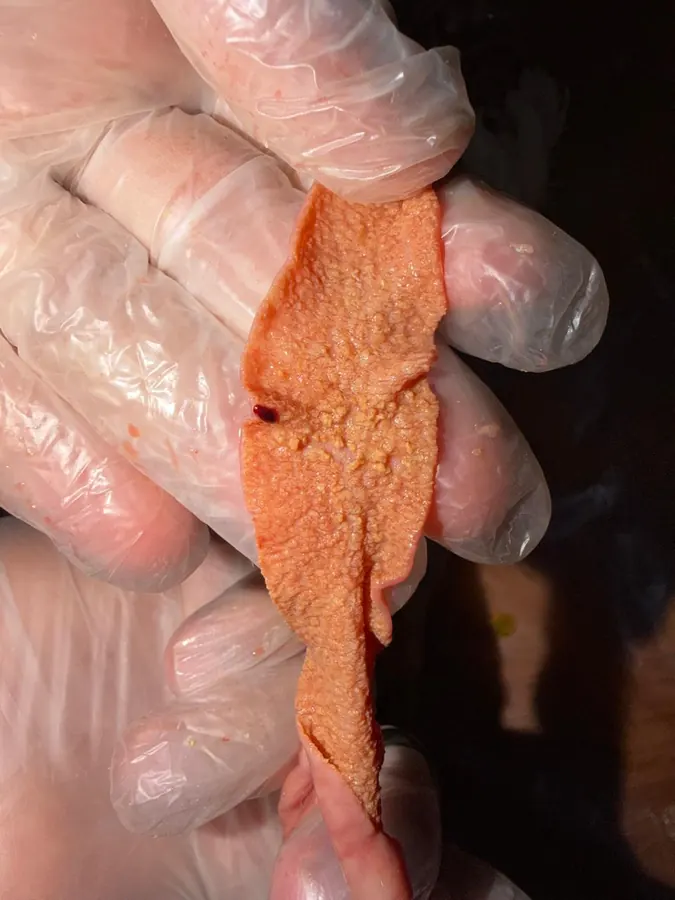
From a field point of view, unexplained mortality may be related to Clostridia. But there are also some classic signs and lesions that may help, such as the Turkish towel appearance, friable and distended intestine, undigested feed, and cholangiohepatitis, which means inflammation of the bile ducts and liver, sometimes with gallbladder enlargement.
There is also a scientific paper that described additional lesions in very young chicks, such as green to dark brown discoloration of the liver, congested lungs, serosanguineous fluid in the caudoventral part of the abdomen, and emphysema in the yolk sacs. In birds older than one week, the same condition may show different signs, including neurological signs such as tremors, stargazing, and incoordination.
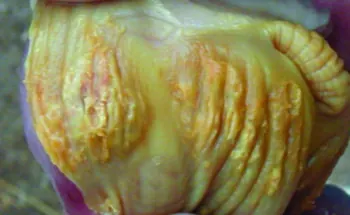
Another interesting paper reported that Clostridia may be associated with gizzard erosions and ulcers, especially in the presence of a feed additive such as copper, even when copper was used at a level considered safe. This is an important point because it makes us rethink gizzard erosions and not connect them only to adenovirus.
One more point I would like to mention, and I think it may be one of the possible causes, is litter turning inside the house.
As we said before, these bacteria are anaerobic. They need amino acids, a suitable environment, and the right conditions to become active. Under the litter, with bird droppings and moisture, Clostridia can become active and produce toxins. When the litter is turned, two things may happen: either birds are exposed directly to the toxins, or they ingest bacterial spores that enter the gut, multiply, and cause disease.
Of course, this depends on the concentration and challenge level. But in general, you should understand that turning litter or wood shavings may be one of the causes that activate Clostridia and may contribute to the appearance of more than one clostridial disease, such as necrotic enteritis or botulism.
#2. Ulcerative Enteritis
Ulcerative enteritis is mainly caused by a bacterium called Clostridium colinum. It can affect chickens, but its impact can be much more severe in quail, where mortality may reach 100%.
In chickens, the disease usually appears after four weeks of age and may cause 2–10% mortality.
One important point to remember is that scientists still do not fully understand the pathogenesis of this disease. The virulence mechanisms of C. colinum are still not fully understood, and more research is needed.
The postmortem lesions are not always highly specific, but you may find multiple large, round, yellowish intestinal ulcers surrounded by hemorrhage. Liver lesions may also be present.
Treatment is similar to other clostridial diseases and usually depends on the use of antibiotics.
#3. Botulism
Botulism is a disease caused by toxins produced by some types of Clostridia, especially Clostridium botulinum type C or mosaic type C/D. These bacteria produce neurotoxins called botulinum neurotoxins, or BoNTs.
These neurotoxins are very powerful and can be fatal at very low concentrations. The immune system may not even have a chance to recognize them properly.
Because these toxins affect the nervous system, they cause characteristic neurological signs such as limber neck. This happens when paralysis starts in the legs and gradually moves upward toward the head, until the bird can no longer raise its head and eventually dies because of respiratory failure.
You may detect the condition early if you see some birds sitting aside and not moving. If you try to push them, they may limp or show weakness. Of course, this sign is not specific, but it should make you observe the birds carefully and follow the progression of the condition.
When do the signs start?
The onset of signs depends on the amount of toxin the bird has ingested. Signs may appear within a few hours or may take up to 13 days.
Remember, because botulism is caused mainly by neurotoxins, you usually do not find specific postmortem lesions in the bird.
Another important point is that infection with this bacterium does not produce useful immunity. As mentioned earlier, the toxigenic dose is lower than the immunogenic dose. This means the amount of toxin needed to kill the bird is much lower than the amount needed to stimulate immunity.
#Final Message
Clostridia should not be seen only as bacteria that appear suddenly and cause disease. They are part of a larger gut-health story.
The real problem starts when the intestine loses its balance.
Coccidiosis, mycotoxins, immunosuppression, poor feed quality, wet litter, litter turning, and unstable gut microbiota can all create the right environment for Clostridia to become active and harmful.
Resources:
1. https://www.mdpi.com/2076-2607/8/10/1533
2. https://www.mdpi.com/2076-2615/10/2/240
3. https://avian-diseases.kglmeridian.com/view/journals/avdi/66/3/article-p337.xml?isSearch=true
4. https://avian-diseases.kglmeridian.com/view/journals/avdi/67/4/article-p349.xml?isSearch=true
5. https://onlinelibrary.wiley.com/doi/abs/10.1002/9781394210176.ch14
6. https://avian-diseases.kglmeridian.com/view/journals/avdi/69/1/article-p91.xml?isSearch=true
7. https://avian-diseases.kglmeridian.com/view/journals/avdi/69/2/article-p183.xml?isSearch=true
8. https://avian-diseases.kglmeridian.com/view/journals/avdi/61/4/article-p503.xml?isSearch=true
9. https://www.frontiersin.org/journals/veterinary-science/articles/10.3389/fvets.2025.1544519/full
10. https://www.sciencedirect.com/science/article/pii/S0032579125015299
11. https://www.nature.com/articles/s41598-025-12519-0
12. https://link.springer.com/article/10.1186/s12917-025-04624-z
13. https://jevma.journals.ekb.eg/article_467866.html
14. https://link.springer.com/article/10.1007/s11250-025-04441-4
15. https://link.springer.com/article/10.1007/s11259-026-11152-0
16. https://www.mdpi.com/2218-273X/16/4/575
17. https://www.sciencedirect.com/science/article/pii/S1075996426000016
18. https://www.wiley.com/en-us/shop/general-introductory-veterinary-medicine/diseases-of-poultry-2-volume-set-14th-edition-p-9781119371175
Written by
ahmed fathi